What you eat in Serra da Estrela is what the mountain makes.
The food of Serra da Estrela is not a curated regional cuisine. It is what the mountain produces and what the people who lived on it needed to survive. The sheep that graze the high pastures provide milk for the cheese and meat for the table. The goats produce cabrito — kid goat, roasted slowly — which appears on almost every menu in every village in the range. The rivers provide trout. The forests provide mushrooms in autumn. The cold makes preservation necessary, and so the charcuterie tradition is deep: chouriço, linguiça, salpicão — smoked and cured meats that last through the long winter.
The best restaurants in Serra da Estrela are not always the most visible. The places worth finding are the ones where the menu changes with the season and the owner knows the producer. They are rarely on the main road through the valley.
Where to eat in Serra da Estrela.
In Manteigas, the village at the base of the Zêzere glacial valley, Restaurante O Olival has built a reputation for consistent regional cooking over many years. The bacalhau na telha — salt cod baked on a clay tile with olive oil, garlic, and potatoes — is the dish most mentioned by visitors who return. The room is plain. The wine list is regional. The food is the point.
Restaurante Central in Manteigas is older and simpler. It sits at the entrance to the village and has been feeding locals and passing travellers for decades. The half-portion system — where a single serving is enough for two people — is common in the mountain restaurants of Serra da Estrela. It reflects a cooking tradition designed for appetite after physical work, not for portion-controlled dining.
In Seia, on the western edge of the range, Restaurante Regional da Serra has been operating for over forty years. The chanfana — goat slow-cooked in red wine in a clay pot — is the dish that draws people from outside the region specifically to eat here. The owner has been the same for most of that time. The recipe has not changed.
In Sabugueiro, the highest village in Portugal at approximately 1,050 metres above sea level, Mirante da Estrela offers mountain views alongside regional food. Sabugueiro sits on the road to Torre and receives the most tourist traffic of any village in the range. Arrive early or late to avoid the peak hours.
The dishes that are specific to this mountain.
Queijo Serra da Estrela is the starting point. The cheese is made between November and March from raw sheep's milk coagulated with wild cardoon thistle rather than animal rennet — a technique recorded in this region since at least the thirteenth century. It is soft and spreadable when young, firm and intense when aged past four months. Eat it with mountain bread. It does not need accompaniment.
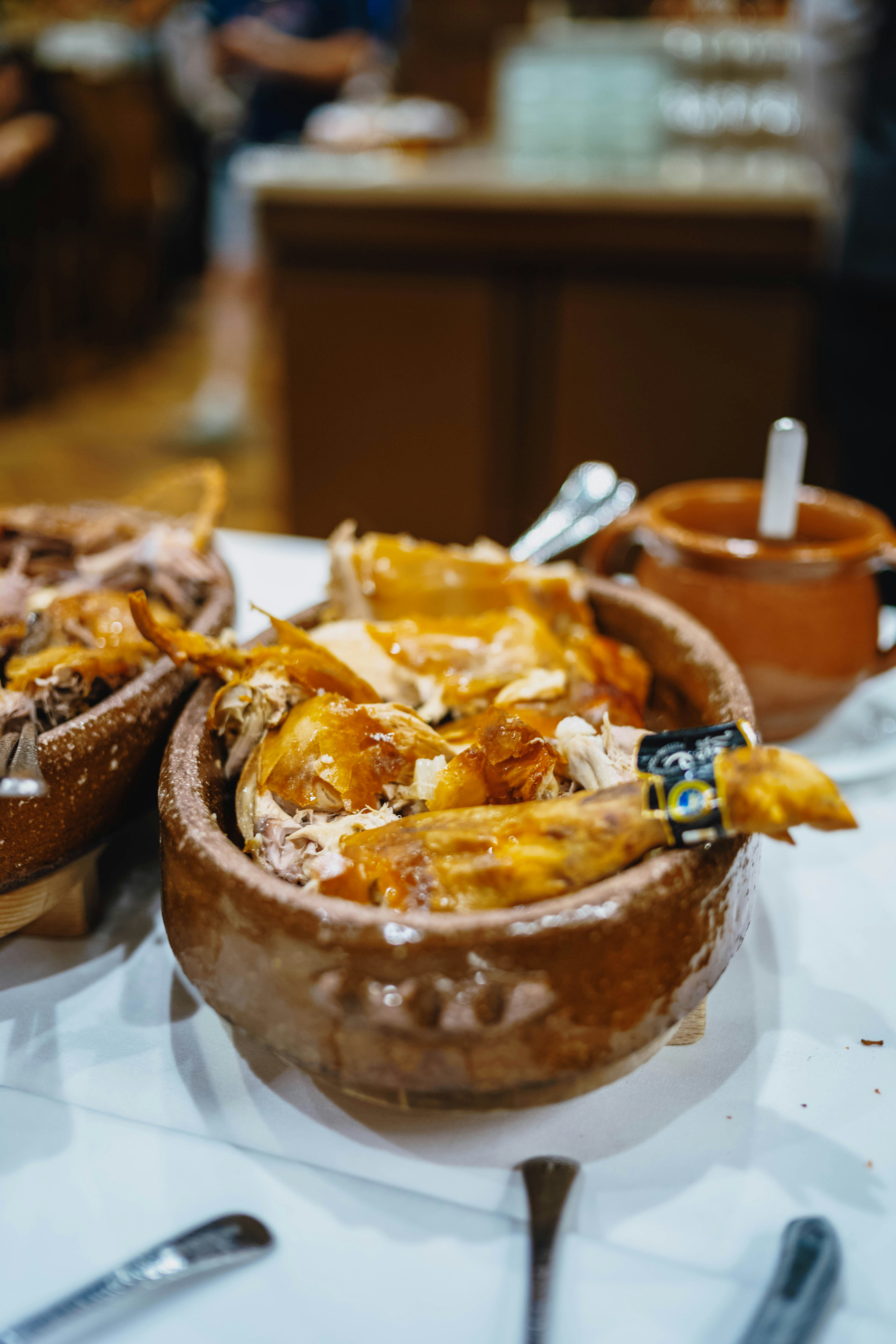
Cabrito assado — roasted kid goat — is the dish most associated with celebration and Sunday lunch across Serra da Estrela. The roasting is slow: garlic, white wine, lard, rosemary, bay. The result is a specific flavour that no other meat in the range produces. Order it in advance at smaller restaurants where it is prepared to order rather than held.
Chanfana is older and heavier. Goat cooked long and slow in red wine, sealed in a clay pot and left in a low oven until the meat falls from the bone. It originated in the Beiras region as a way of cooking older animals into something worth eating. The wine cuts through the age of the meat. The clay pot holds the heat evenly. The result tastes of a specific place and a specific practical problem solved well.
The supply ledgers of Fort Kael record provisions for extended field assignments. One entry notes a consignment of cured meats from a supplier in the lower valleys — the exact location given as a settlement reference that no longer appears in current maps. A later hand has added in the margin: "supplier no longer active. quality of substitute not equivalent." No further note explains what happened to the original supplier or when.