A route shaped like a fish spine, stretching seven hundred kilometres.
The seasonal movement of sheep flocks in the Serra da Estrela follows a pattern that predates every document that records it. In summer, from around the feast of St John on the 24th of June, flocks ascended to the high pastures — altitudes between one thousand and nineteen hundred metres, where the grass was rich and the heat of the lowlands could not reach. The journey up took two days and covered around forty kilometres. Shepherds slept under large granite overhangs called lapas, or in small stone huts, storing their food in granite hollows they called arcas do pão — bread chests cut into the rock.
In late October or November, when the first snow appeared on the ridge, the invernada began — the winter migration back down. The direction depended on where a shepherd came from. Those from the northeast slopes headed toward the Douro valley. Those from the western side moved to the Tejo basin. Those from the central villages followed the Mondego. The routes were not negotiated each year. They were inherited. A shepherd walked where his father had walked, and his father before him, in a line that no record has a beginning for.
At its peak, the great Iberian transhumance route stretched nearly seven hundred kilometres, from the high plateaus of Madrid all the way to the Serra da Estrela. Smaller herds joined the movement along the way, the route branching and converging like the spine of a fish. Wool from sheep that had moved seasonally between mountain and plain was finer than wool from sedentary flocks — the movement itself improved the fleece. The routes shaped not just the shepherds but the economy of every town they passed through.
In April 2022, Portugal formally recognised transhumance as national intangible cultural heritage. Today the ascent still happens — flocks are blessed at local churches, circling three times before the climb begins. The practical reason for the journey has weakened as rural depopulation has left more lowland pasture available. The ritual reason has not.
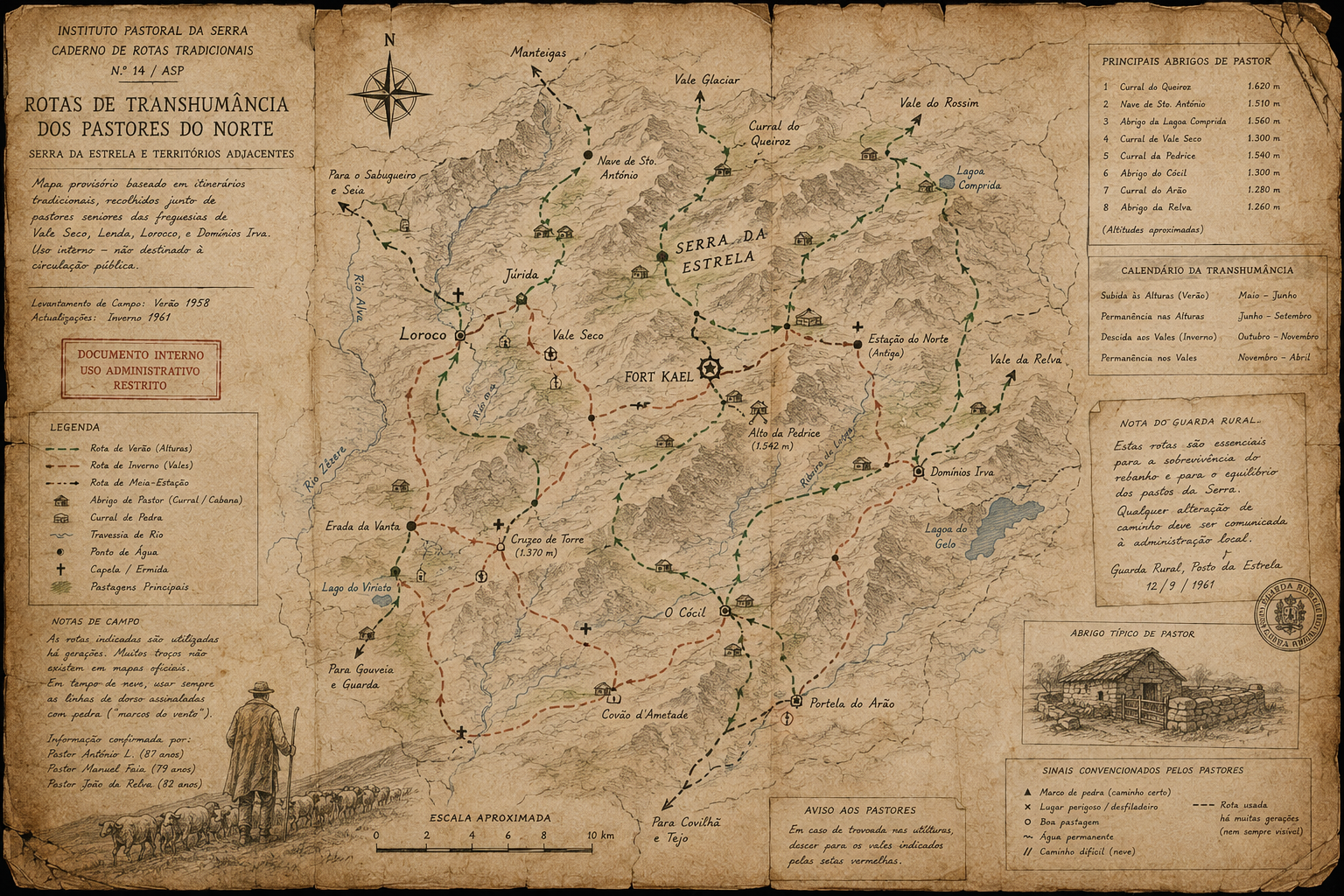
The route was never officially recorded. It was simply always known.
ASHWANA's route network functions the same way. The paths Kira surveys at Fort Kael are not paths anyone designed. They are paths people walked until the walking made them permanent. The seasonal shepherd routes of the real Serra da Estrela are the same — older than any map, maintained not by administration but by repetition.
Fort Kael's route ledgers include a category called "inherited passages" — paths that appear in the records without any entry marking their establishment. They simply appear, already named, already in use, with no origin document. Several annotators across different periods have noted this absence and flagged it for investigation. No investigation was ever opened. The paths continued to be used. The absence of an origin document was eventually treated as normal.
One ledger entry from an unnamed period reads: "Route confirmed in use. Origin unknown. No action required."