Authenticity is not a feature. It is an absence.
The word authentic, applied to a village, usually means one of two things. Either the village has been restored to look the way it once did — in which case authenticity is a construction, a product of deliberate effort — or the village never changed enough to require restoration, in which case authenticity is simply what remains when nothing was done to it.
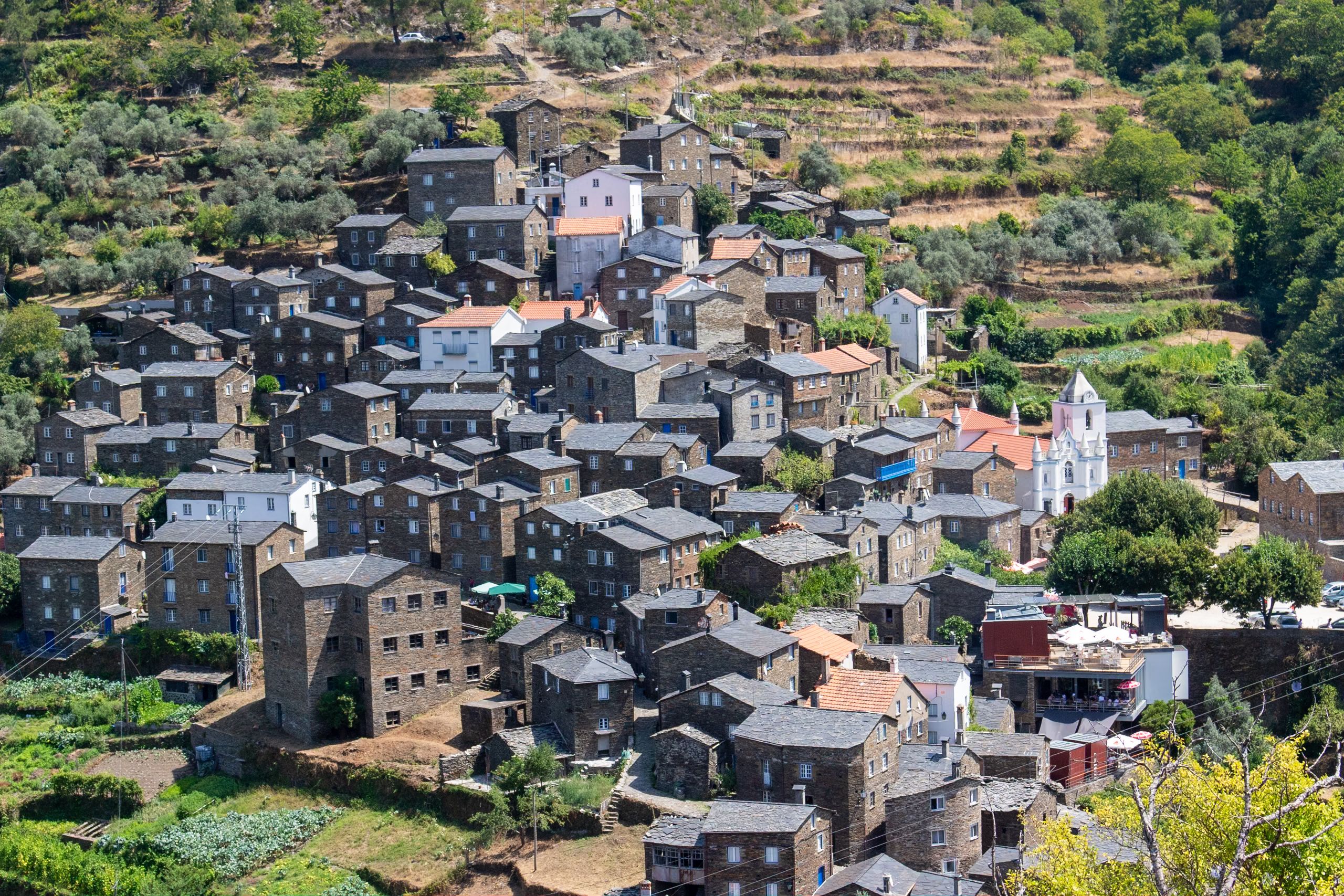
The mountain villages of Serra da Estrela that still feel authentic belong to the second category. They were not preserved. They were not restored. They continued, at varying levels of activity, with varying numbers of permanent residents, without sufficient outside pressure to change their fundamental character. The granite stayed granite. The streets stayed narrow. The communal ovens stayed in place, used less frequently than before, but not removed.
What makes a village feel authentic to a visitor is usually the absence of the apparatus of tourism: no signs in multiple languages, no curated craft shops selling the same objects available at the airport, no restaurants with menus designed for international palates. The authentic village is the one that was not expecting you.
Folgosinho. Alvoco da Serra. Valezim. Villages that were not expecting anyone.
Folgosinho sits in the municipality of Gouveia, on the northern slopes of Serra da Estrela. It is small enough that its permanent population can be counted in dozens. Its streets are cobbled granite. Its church is Romanesque. Its fountain carries an inscription that has been read by every person who passed through the village for several hundred years. The Rota dos Galhardos walking route passes through it, which brings occasional visitors, but the village was not built around the route and does not perform for it.
Alvoco da Serra is further into the mountains, in the valley of the Alvoco river. The river runs cold even in summer, fed by snowmelt from the upper plateau. The village has a river beach that draws visitors in July and August. The rest of the year it is largely left to its permanent residents, their gardens, and the sound of the water. There is no tourist infrastructure to speak of. There is a café. There are stone houses. There is the river.
Valezim, in the municipality of Seia, is smaller still. It has the character common to the highest-altitude Serra da Estrela settlements — tight construction, low doorways, the feeling of a place that organised itself entirely around surviving winter. The wool tradition was central to the village economy for centuries. The sheep are fewer now. The looms are mostly gone. The stone remains.
The villages that feel most authentic are the ones that lost the most people.
There is a direct relationship between the degree of rural depopulation and the degree of felt authenticity in Serra da Estrela's mountain villages. The villages that emptied fastest — that lost their young populations to the cities in the 1960s and 1970s, during the period of rapid Portuguese urbanisation — are now the ones that feel most unchanged. The economic forces that would have modernised them arrived too late, after the population that would have driven change had already left.
This is not a comfortable observation. The villages feel authentic because they represent the arrested development of communities that did not thrive. The stone houses are intact because nobody had the money or the reason to rebuild them. The communal ovens are still standing because the villages did not grow large enough to render them obsolete. Authenticity, in this context, is inseparable from a form of loss.
The villages that have retained larger permanent populations — Manteigas, Seia, Gouveia — have changed more visibly. They have supermarkets. They have paved roads with passing places. They have accommodations designed for visitors. They are functional in the contemporary sense. They are also less frequently described as authentic.
In the world of ASHWANA, settlements are classified by population stability.
The Survey Division of Fort Kael maintains a settlement register that classifies each habitation in the mountain territory by what it calls population stability — a designation that tracks not the size of a settlement but the consistency of its occupation across survey periods. A settlement with a stable population of twelve is classified differently from a settlement that once held two hundred and now holds twelve. The record of the change is considered significant. The current state alone is not.
The villages in the Survey Division's register that carry the highest population stability scores are not the largest. They are the most remote. The ones that roads did not reach until recently. The ones that had no particular reason to change, and so did not. The Survey Division notes, in its classification guidelines, that high stability scores do not indicate prosperity. They indicate isolation.
The real mountain villages of Serra da Estrela and the fictional settlements of Fort Kael's territory share this quality. What looks like preservation is often simply the residue of being left alone long enough for everything else to change around it.
ASHWANA — Book One of The Fractured Elden — is available now on Amazon, Apple Books, Kobo, and Google Play. The archive is not yet closed.