What makes it different is what is not in it.
Most cheese in the world is made with animal rennet — an enzyme taken from the stomach lining of a young ruminant, used to coagulate the milk. The Serra da Estrela cheese uses something else entirely. The coagulant is an extract from the dried flowers of the cardoon thistle, a wild plant that grows naturally in the region. The thistle is harvested, dried, ground, and dissolved in water. The liquid is added to raw sheep's milk heated to between twenty-seven and thirty-two degrees. Within forty-five to sixty minutes, the milk sets.
The technique is not an innovation. It appears in records from Roman times. It was used because animal rennet was scarce and expensive in a poor mountain region, and the cardoon thistle was neither. What began as a practical substitution became, over centuries, the defining characteristic of the cheese — the slightly bitter, herbaceous quality that distinguishes it from every other sheep's cheese made anywhere else.
The milk comes from two breeds: the Bordaleira Serra da Estrela and the Churra Mondegueira, both native to the region, both capable of surviving its winters. The cheese is made between November and March, when the ewes are milking and the cold slows the ripening process enough to develop the flavour correctly. The minimum ripening time is thirty days. An aged version, the Queijo Velho, ripens for at least a hundred and twenty days and develops a firm, intense paste very different from the soft, spreadable younger cheese.
In 1287, King Dom Diniz established the first cheese market in Celorico da Beira, within the Serra da Estrela region. The cheese appears in the lyrics of the medieval poet Gil Vicente. It was carried by Portuguese explorers on long sea voyages as a preserved food source. In 1996, the European Union granted it Protected Designation of Origin status, restricting the name to cheese produced within a defined geographical area using the original methods.
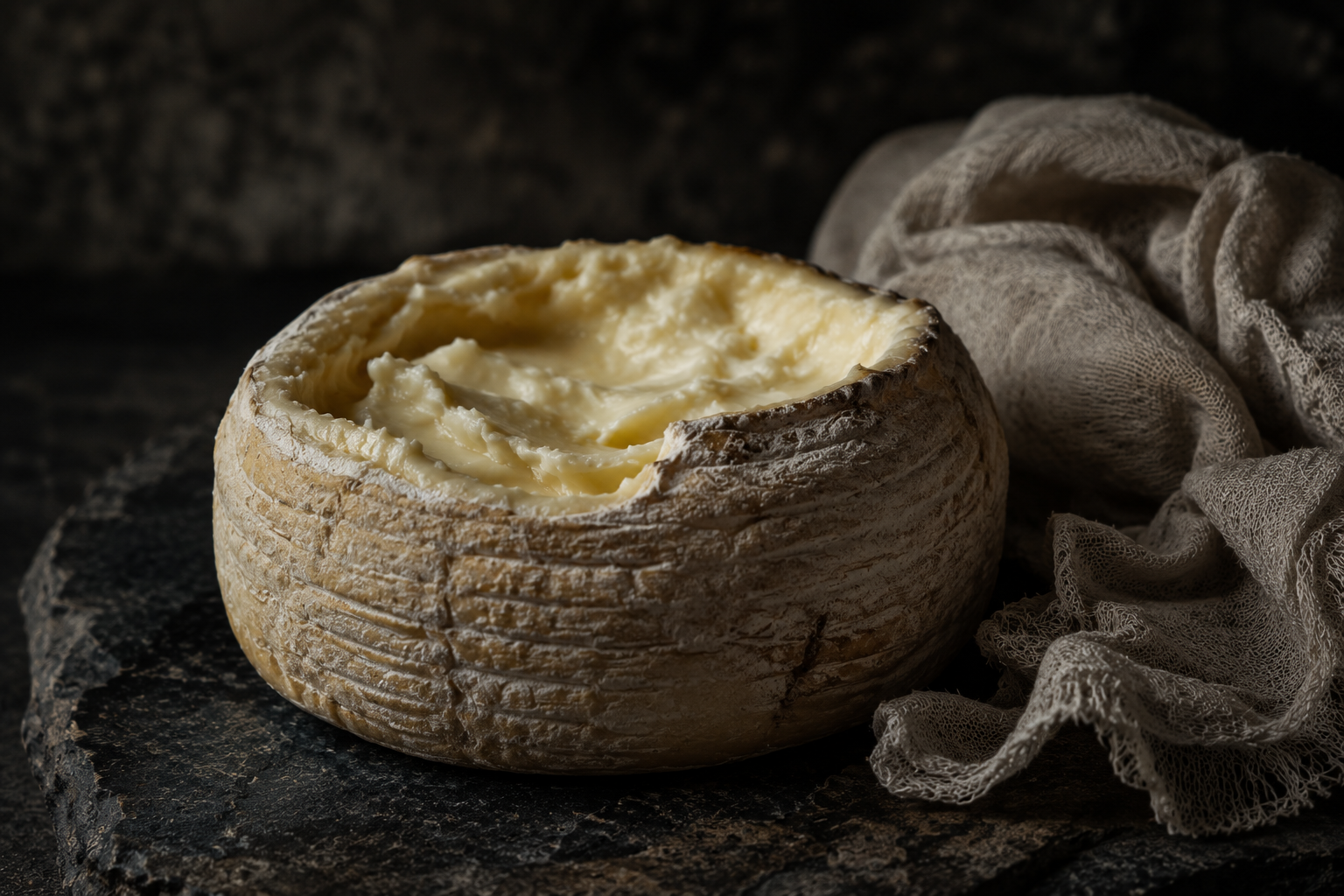
The recipe survived. The conditions that made it necessary did not all survive with it.
ASHWANA's world preserves knowledge the same way this cheese does — not through formal documentation but through practice, material, and the specific conditions that made the practice necessary. The cardoon thistle coagulant is a solution to a problem that no longer exists in the same form. The solution outlasted the problem, and in doing so became something worth preserving for its own sake.
The food records at Fort Kael include a section on provisions for extended field assignments. Several entries specify a cured soft cheese, produced locally, recommended for winter rations on the basis of its preservation qualities in cold conditions. The supplier is listed only by a location reference that no longer corresponds to any active settlement. A note added in a later hand reads: "Source no longer available. Substitute identified. Quality not equivalent."