The algorithm rewards what already exists. It does not know what to do with something new.
The fantasy book market in 2026 is driven by recommendation algorithms — on Amazon, on Goodreads, on BookTok, on retail platforms. These algorithms work by similarity. If you read A and liked it, the algorithm shows you B, which resembles A. The system is efficient at surfacing more of what already exists. It is poor at surfacing something that does not resemble anything else.
A hidden gem fantasy is usually hidden for one of two reasons. The first is that it was published before the algorithm existed in its current form — a book from the 1990s or early 2000s that found its readers through word of mouth and never acquired the review volume that would make it visible to modern recommendation systems. The second is that it does not fit any existing category cleanly enough for the algorithm to know where to place it.
The second category is the more interesting one. These are books that are too quiet for the grimdark lists, too dark for the cosy fantasy lists, too literary for the commercial fantasy charts, too specific in their setting to be grouped with the generic secondary-world fantasy that dominates the mainstream. They exist in a space the algorithm has not yet learned to name. Finding them requires the kind of reader who actively looks rather than passively receives recommendations.
Specific worlds. Precise prose. The feeling of having found something.
The hidden gem fantasy books that readers pass between each other — in reading groups, in online communities, in the kind of conversation that begins "I don't know if you'd like this but" — tend to share certain qualities. They are specific rather than generic. The world is not a standard secondary-world fantasy landscape. It is somewhere in particular, with a particular history and a particular character. The specificity is what makes them feel real. The specificity is also what makes them harder to categorise.
They tend to have precise prose. Not ornamental — precise. The writing is controlled. Sentences are doing more than one thing at once. The world is built from carefully selected detail rather than comprehensive description. A reader who pays attention is rewarded. A reader who skims loses something they will not be able to recover.
And they tend to produce a specific feeling in the reader who finds them: the feeling of having found something. Not discovered a new entry in an existing genre. Found something that did not have a name before you read it, and now has your name for it.
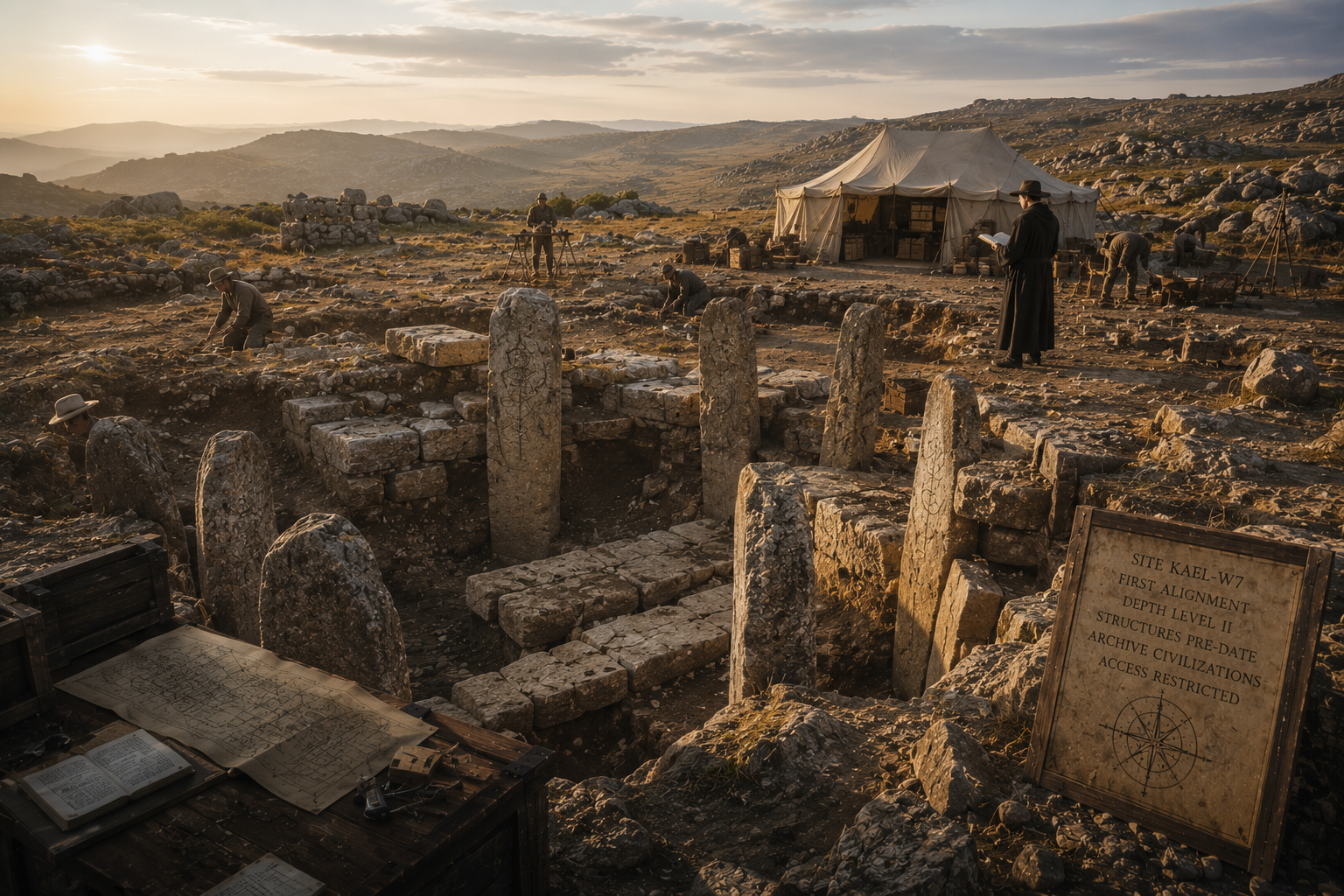
Literary dark fantasy set in Portugal. Archaeological. Institutional. Quiet and certain.
ASHWANA does not fit the existing categories cleanly. It is dark fantasy, but it is not grimdark. It is literary fiction, but it is set in a secondary world built on a real mountain. It is a series, but Book One functions as a standalone. It is atmospheric and slow-burning, but it is also — underneath the quiet — a novel about power, memory, and what institutions do to the people inside them.
The setting is Serra da Estrela, Portugal — the highest mountain range in mainland Portugal, a UNESCO Global Geopark, a glacially carved granite landscape with six thousand years of human occupation. The world of Fort Kael is built directly on this real geography, real folklore, and real history. The Ashlines follow the drainage patterns carved by glaciers. The legends of the mountain — the black dog, the lights on the ridges, the speaking stones — appear in the Archive's Folklore Division records, classified and unexplained.
If you are the kind of reader who finds hidden gems and passes them on — this is one of those books. It does not announce itself. It does not chase the reader. It exists, in a specific place, doing a specific thing, for the reader who is looking for exactly this.
ASHWANA — Book One of The Fractured Elden
Literary dark fantasy set in the real mountains of Serra da Estrela, Portugal. For readers who find things. Available now on Amazon, Apple Books, Kobo, and Google Play.