Not setting. Not description. The feeling of being somewhere specific.
Atmosphere in fiction is not the same as setting description. A book can describe a mountain fortress in precise detail — the height of the walls, the number of towers, the grade of the stone — and produce no atmosphere at all. Atmosphere is what happens when the description of a place produces a feeling that cannot be reduced to any single element of the description. It is the accumulated effect of many precise choices, none of which individually explain it.
The atmospheric fantasy novel makes you feel that you are somewhere. Not that you are reading about somewhere — that you are there, and that being there has consequences for how you think and what you notice and what you are afraid of. The cold is not mentioned. You feel it in the shortness of the sentences, in the way characters move quickly between interiors, in the absence of any scene set outdoors after dark.
This requires a writer who understands that every element of the prose contributes to the experience of the world. Word choice. Sentence length. What is described and what is left out. The atmospheric fantasy novel is not a world described. It is a world built from the inside out, in the reader's imagination, from carefully selected sensory data.
What makes an atmospheric fantasy work.
Physical specificity. The atmospheric fantasy gives you precise details, not general ones. Not "a cold mountain" but the specific quality of cold at altitude — the way it settles differently in valleys than on exposed ridgelines, the way stone holds warmth longer than wood, the way the sound of wind changes when it passes through granite formations rather than open ground. Precision produces immersion. Generality produces nothing.
Historical weight. The world of an atmospheric fantasy feels old. Not because the author tells you it is old, but because the evidence of age is everywhere in the details — worn stone, altered place names, structures whose original purpose has been reassigned, records whose handwriting predates the current institutional style. The world existed before the story. The story is happening inside a world that has its own history, most of which the reader will never see.
Institutional texture. The most atmospheric fantasies tend to have detailed social and institutional structures — not as worldbuilding infodumps, but as the texture through which characters move. The Survey Division, the Territorial Authority, the Archive. The forms that must be filed. The routes that have been reclassified. The divisions that do not share their files. These structures produce atmosphere because they make the world feel real in the specific way that bureaucracy makes things feel real — heavy, slow, and impossible to argue with.
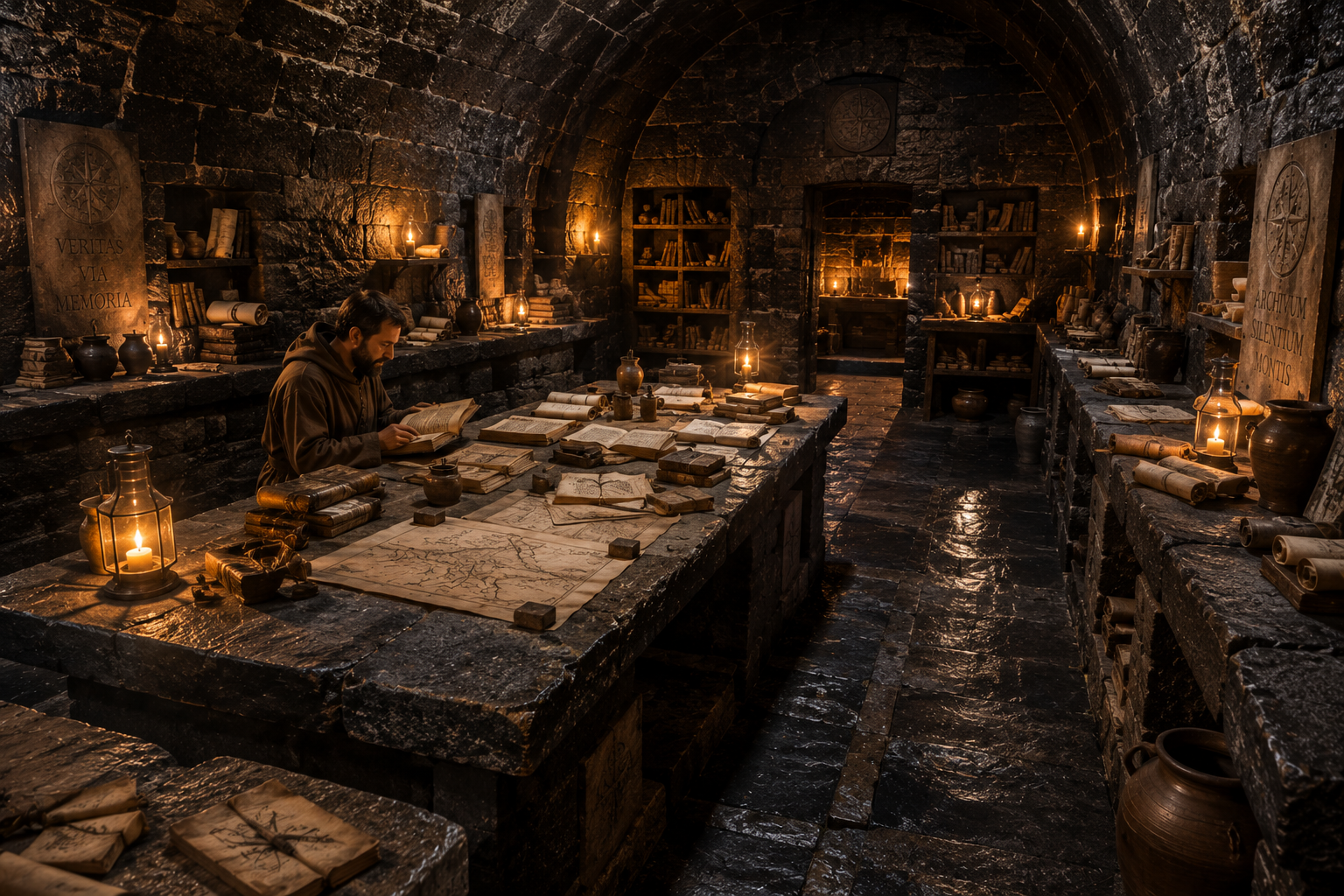
A granite mountain. A fortress built to last. The cold that arrives before anyone says so.
ASHWANA is set in Serra da Estrela — the highest mountain range in mainland Portugal, a glacially carved granite landscape where winter arrives early and the cold is structural rather than seasonal. The atmosphere of the novel is built from the real physical qualities of this place: the weight of granite, the quality of light at altitude, the specific silence of a mountain plateau in the hour before dawn.
Fort Kael is a working institution. The Survey Division files route reports. The Territorial Authority maintains boundary classifications. The Archive catalogues everything and explains nothing. The atmosphere of the novel is not produced by describing the fortress. It is produced by the texture of how the fortress works — the forms, the classifications, the procedures that have been in place long enough that nobody currently employed can remember why they were established.
The cold in ASHWANA is not described. It is present in the decisions characters make — the route they take, the time they leave, the weight of what they carry. The history is not explained. It is present in the gaps in the record, the sealed division, the commandant who has been here longer than the oldest personnel file. Atmosphere is what fills the space between what is said and what is meant.
ASHWANA — Book One of The Fractured Elden
A seven-book literary dark fantasy series set in the real granite mountains of Serra da Estrela, Portugal. Available now on Amazon, Apple Books, Kobo, and Google Play.