Serra da Estrela mountains Portugal — five facts that separate it from everything else.
Serra da Estrela is the highest mountain range in mainland Portugal. Its summit, Torre, reaches 1,993 metres — not a sharp peak but a plateau, an uplifted remnant of ancient landscape accessible by paved road. The range runs 65 kilometres from northeast to southwest across the districts of Guarda and Castelo Branco, between the basins of the Tagus and Mondego rivers.
It is the only place in mainland Portugal where snow is guaranteed every winter. It holds the country's only ski resort. It is the source of the Mondego — the longest river with its source entirely within Portugal — and two other rivers, the Zêzere and the Alva. All three begin on this mountain and flow outward to the rest of the country. Serra da Estrela is not a landmark. It is an origin.
The glacial landscape is the quality that sets it apart from every other Portuguese mountain. During the last glacial maximum, approximately 30,000 years ago, an ice field 66 square kilometres in area covered the high plateau. The Zêzere glacier carved the longest glacial valley in the Iberian Peninsula. The cirques, the U-shaped valleys, the moraine fields, the glacial lakes — these are direct evidence of the ice, still legible in the granite 30,000 years after the ice retreated. No other Portuguese mountain has this history. Serra da Estrela is the westernmost glaciated range in the entire Iberian Central System.
Six thousand years of continuous human occupation. The routes are older than the villages.
Human occupation of Serra da Estrela dates to the beginning of the fourth millennium BC. The dolmens aligned with the mountain's ridgeline, the prehistoric rock engravings of the region, the Iron Age hill forts, the Roman roads that crossed the plateau — these are not background to the landscape. They are part of it. The mountain has been inhabited, crossed, used, named, and interpreted by human beings for six millennia.
The shepherd routes that crossed Serra da Estrela for the seasonal movement of flocks between high summer pastures and low winter valleys follow paths that in some cases predate the agricultural economy that most recently used them. The knowledge of how to move through the mountain safely — which passes hold in winter, which springs are reliable, which routes become dangerous in fog — accumulated across generations without being written down. It lives in the landscape itself, in the worn granite of old paths, in the cairns left at altitude by people whose names are not in any register.
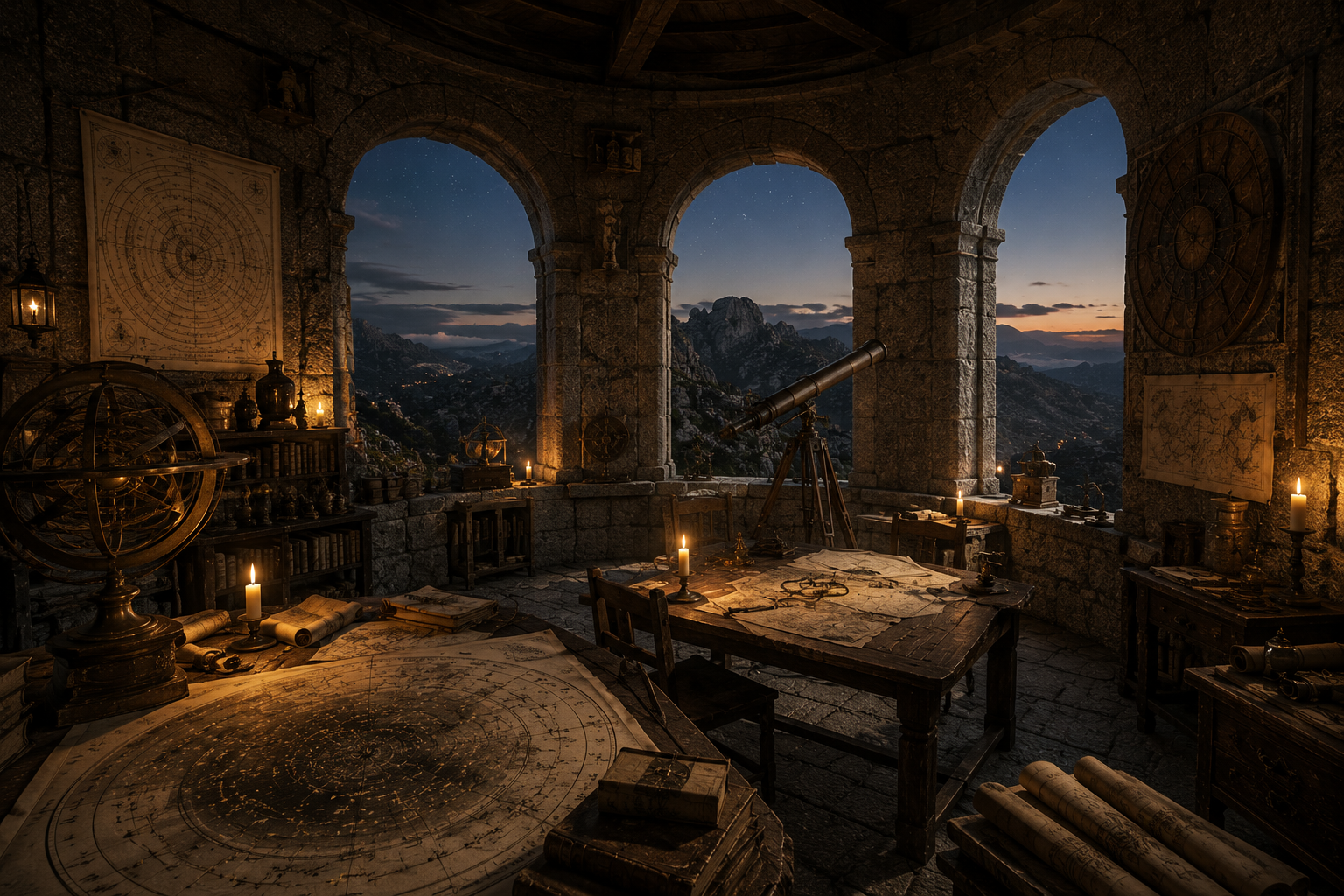
ASHWANA is dark fantasy set in this specific landscape. Not inspired by it. Built from it.
The world of ASHWANA uses the real geology, hydrology, settlement patterns, and oral tradition of Serra da Estrela as its foundation. Fort Kael sits where the terrain demands a fortress. The Ashlines follow the drainage patterns carved by glaciers. The forbidden Ashwaste occupies the high plateau where the ice field was — the place where the ordinary rules of terrain have never fully applied.
The series is seven books. Book One — ASHWANA — is set five hundred years after a catastrophe that no one inside the fortress fully understands. The records are precise. The records are incomplete. The mountain remembers what the archive does not.
ASHWANA — Book One of The Fractured Elden — is available now on Amazon, Apple Books, Kobo, and Google Play.