One sheep, one fabric, one mountain range.
The wool from Serra da Estrela is not the finest wool in Portugal. That distinction belongs to the Merino, raised elsewhere. The wool from the Bordaleira sheep — the breed native to the Serra da Estrela, one of the few breeds capable of surviving its winters — has short, thick fibres. It is coarser than Merino, less valuable by the standard measures of the wool trade, and in a wealthier region it might never have become anything notable at all.
This was not a wealthy region. The shepherds who worked the mountain needed a fabric that could hold against cold, wind, and rain for hours or days without shelter. The Bordaleira's wool, precisely because its fibres were short and dense, could be compressed through a process called stomping — the wool is woven into a mesh, spun into thread, woven into fabric, and then beaten with wooden pillars for four to five hours until the fibres lock together into something that repels water without any chemical treatment. The result is called burel.
Burel was used for shepherd's cloaks, for the robes of religious confraternities, and for the everyday heavy-duty clothing of mountain workers. Its natural colours came from the sheep themselves — white, brown, and a honey tone called surrobeca. For most of its history, no dyes were added. The colour of the fabric was the colour of the animal it came from.
By the early 2000s, competition from cheaper imported fabrics had closed almost every wool factory in Manteigas, the town in the Serra da Estrela that had centred its economy on wool production for over a century. One factory survived. In 2010, new owners restored it, trained new workers on the original machinery, and began producing burel again — this time in colours and formats that reached international design markets. The fabric that kept shepherds alive in the mountains is now sold in design shops in Tokyo and Lisbon.
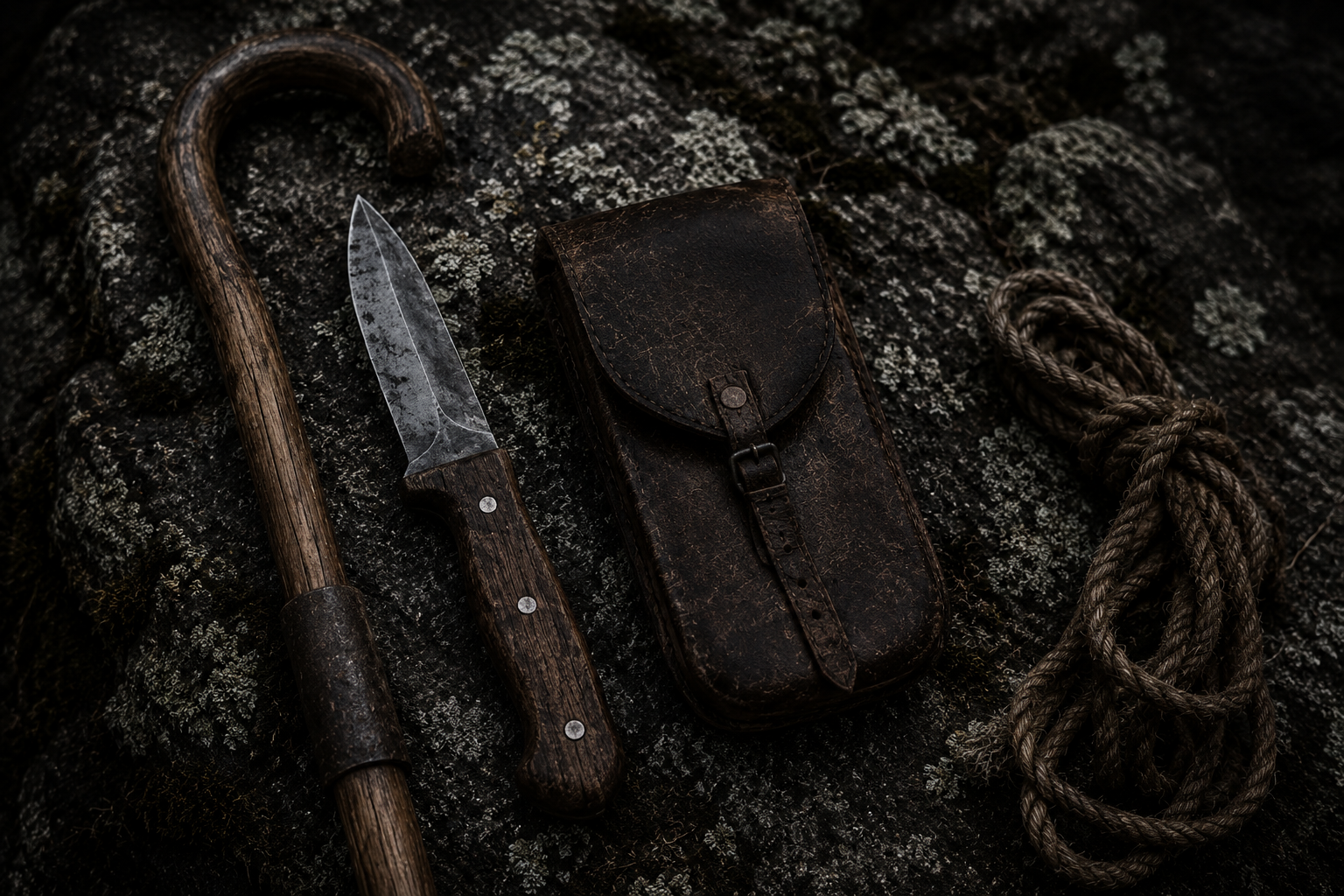
The material carried the knowledge. The knowledge nearly disappeared with it.
ASHWANA's material world is built on this principle — that the objects a civilisation makes are also the record of what it knew. Burel is not just a fabric. It is a record of the specific wool fibre length of one breed of sheep, the specific compression technique that makes it waterproof, and the specific climate that made waterproofing necessary. Lose the sheep, lose the technique, or lose the mountain, and the fabric becomes impossible to recreate exactly.
The material records at Fort Kael include a section cataloguing fibres, weaves, and fabric techniques used by personnel for cold-weather field assignments. Several entries reference a specific type of woven cloth described as "resistant to extended water exposure without treatment" and sourced from a village whose name appears in no other record. The technique for producing it is described in partial notes only. A subsequent entry, filed by a different hand, reads: "Original supplier no longer reachable. No replacement identified. Field kit composition revised accordingly."