Serra da Estrela means Mountain Range of the Star.
In Portuguese, serra refers to a serrated mountain chain — the word itself evokes the jagged silhouette of high ridgelines seen from a distance. Estrela means star. Together: the mountain range of the star, or the star mountain range. The translation is straightforward. The origin is not.
The most widely accepted explanation traces the name to the Latin stella, carried into Portuguese through the medieval period. Throughout the Middle Ages, it was common to assign celestial names to places of dominant geographical importance — mountains that served as orientation points, landmarks visible from great distances, features that organised the territory around them the way a fixed star organises the night sky.
Serra da Estrela is the highest mountain range in continental Portugal, reaching 1,993 metres at its summit Torre. From the surrounding lowlands, it is visible from distances that would have made it a primary navigation landmark for anyone crossing central Iberia. A mountain that stands like a star above the horizon. The name follows from the function.
Medieval documents already used the name. No founding document exists.
Administrative and religious records from the medieval period already referred to the range using names close to Serra da Estrella — the doubled consonant was standard orthography of the period. The name appears in boundary documents, in land grants, in records of monastic holdings in the region. It was already in use before anyone thought to explain it.
This is how most place names work. They precede their own documentation. By the time a name appears in a written record, it has already been in use long enough to require no introduction. The record does not create the name. It inherits it.
What no document records is the moment the name was first used, the person who first used it, or the precise reasoning behind it. Several competing explanations have accumulated over the centuries. The astronomical explanation — orientation, navigation, the mountain as celestial landmark — is the most widely cited. It is not the only one.
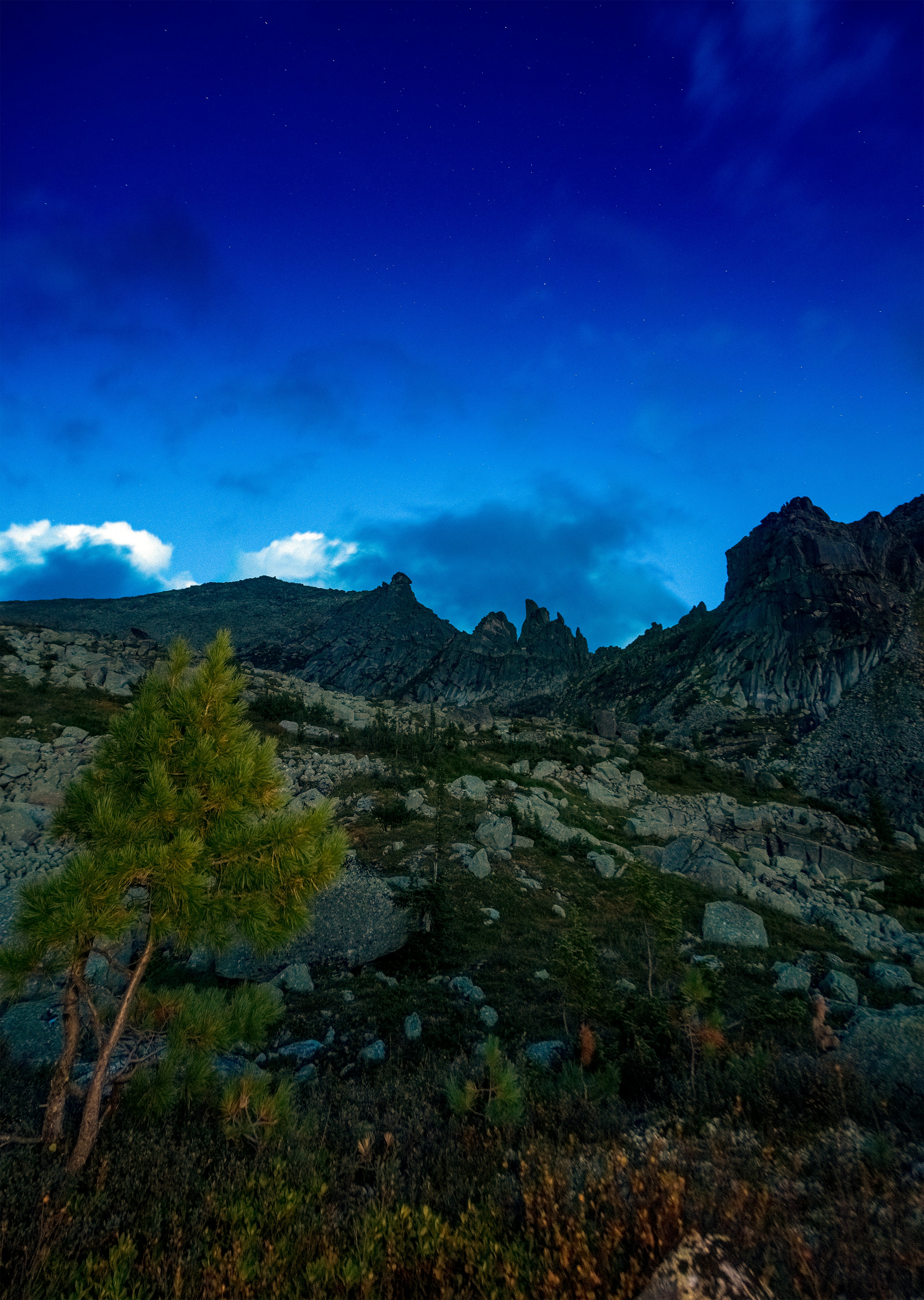
A shepherd. A star. The peak of the highest mountain.
The other explanation is a legend, and legends do not compete with etymology — they run parallel to it, carrying a different kind of truth.
A shepherd lived in a poor village in the foothills, surrounded by mountains he had never crossed. One night, a star descended from the sky and walked beside him. For years, the shepherd and the star moved through the mountains together — crossing rivers, passing through villages, climbing higher than he had ever gone. Eventually the shepherd reached the summit of the highest peak in the range, and looked out over a horizon he had never seen. His companion, the star, rose back into the sky.
The mountain kept the name of what had guided him there.
The legend has been passed through generations of rural communities in the Serra da Estrela region. It does not explain the etymology. It explains something else: why a name sticks. Why a mountain called the Star Mountain still feels, to people who live in its shadow, like a name that fits. Astronomical orientation is a rational explanation. The shepherd's star is the explanation that survives in oral tradition because it contains something the administrative record does not.
In the world of ASHWANA, names are records.
The world of ASHWANA is built on the landscape of Serra da Estrela — its granite, its glacial valleys, its altitude, its routes through difficult terrain. But it is also built on the way Serra da Estrela handles its own history: through documents that do not record origins, through names whose explanations have multiplied rather than narrowed, through legends that outlast the administrative record by several centuries.
In the Archive of Fort Kael, place names are treated as primary source documents. The name of a valley, a pass, a standing stone, a stretch of forbidden territory — these are the oldest records the Survey Division has. Older than the founding mandate. Older than the first patrol logs. The names were already there when the institution arrived to document them.
What the names mean, exactly, is a question the Archive has never fully resolved. The Survey Division maps the territory. The Territorial Authority classifies it. The Folklore Division collects the stories attached to it. None of these divisions share their findings with the others. The name of the Ashwaste appears in all three. No two accounts agree on what it refers to.
ASHWANA — Book One of The Fractured Elden — is available now on Amazon, Apple Books, Kobo, and Google Play. The archive is not yet closed.