Built into the rock, not beside it.
Monsanto, in the Castelo Branco district of Portugal, is built on a hillside covered in enormous granite boulders. The houses do not sit beside the boulders. They are built between them, under them, and in some cases directly into them. Doorways are fitted into rock faces. Walls close the gaps between stones that have not moved in millions of years. A ruined Templar castle sits at the summit, above cobbled streets that wind through a landscape that feels less like a village and more like a settlement that simply grew into whatever space the mountain allowed.
Monsanto is sometimes called the most Portuguese village in Portugal — a designation awarded in a national competition in 1938, which the village has held ever since. The prize was a silver rooster, which hangs in the local church. The village has not changed substantially in centuries. The granite does not allow for much change.
Further north, on the border with Spain, there is a village called Rio de Onor. It sits precisely on the border — half in Portugal, half in Spain — and for most of its history the border was largely irrelevant to the people who lived there. They farmed the land collectively, shared resources across the border, and developed their own dialect, called Rionorês, spoken in no other place on earth. It is a mixture of Portuguese and Spanish that evolved in isolation, on both sides of a line that the village simply refused to recognise as a division.
The population of Rio de Onor has fallen to a handful of elderly residents. The collective farming system still formally exists, maintained by those who remain. The dialect is still spoken by the few who grew up with it. When they are gone, the language will be gone with them, because there is nowhere else it lives.
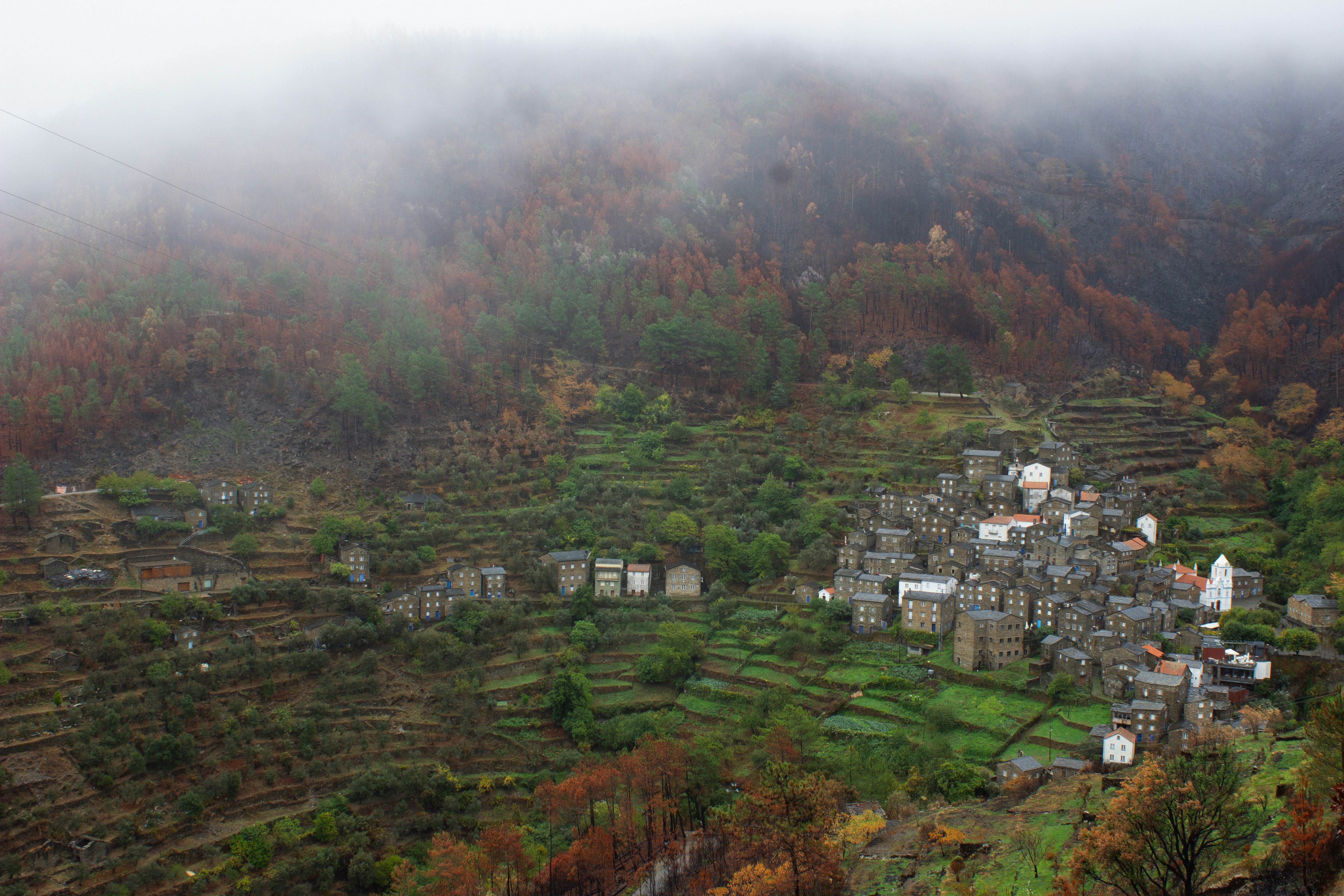
The place continued. The people did not.
ASHWANA's world is built on the idea that a civilisation's memory outlasts the people who carried it — that the routes remain after the shepherds, that the records remain after the administrators, that the walls remain after the inhabitants. Monsanto and Rio de Onor are both examples of the same thing: a place that persisted through a version of time that erased almost everything else around it, and that now exists in a condition where the form is intact but the life inside it is nearly gone.
Among the settlement records at Fort Kael, several entries describe outposts where the physical structure remained in good condition long after the last personnel assignment ended. The buildings were maintained in rotation inspection schedules for years after the outposts ceased to be actively staffed. One entry, filed by an inspector who found a structure in perfect repair with no personnel present and no record of when the last assignment had ended, closes with a line that appears to have been added as an afterthought: "Building intact. No signs of recent occupation. No signs of recent abandonment either."