Three words that each mean something specific.
The phrase is made of three separate claims. Each one matters. Put together, they describe a very particular kind of book.
Literary does not mean difficult or prestigious. It means the prose carries weight of its own. The writing is not a container for the plot — it is part of the experience. A sentence in a literary novel can stop you, not because something happened, but because of how something was observed, or how a silence was described. The language is deliberate. Nothing is accidental.
Slow burn means the story does not rush. It does not open with an explosion, a prophecy, or a map of the dead. It earns its revelations. Characters are understood before they are tested. The world is inhabited before it is threatened. Tension accumulates across chapters, across silences, across small observations that only become significant later. The reader has to stay. The book does not chase them.
Historical dark fantasy means the darkness is grounded. Not grimdark — which is darkness as tone, as nihilism, as violence for atmosphere. Historical dark fantasy draws from what has actually happened to human societies: the weight of institutions, the slow erosion of memory, the way power organises itself into records and classifications and borders. The supernatural, when it appears, does not arrive from outside the world. It is part of how the world already works.
What it is not.
It is not grimdark. Grimdark turns moral ambiguity into spectacle — blood, betrayal, the endless reminder that no one can be trusted. Literary slow-burn historical dark fantasy is not interested in spectacle. It is interested in systems. How power accumulates. How silence is maintained. What gets recorded and what does not.
It is not epic fantasy with the brightness turned down. Epic fantasy organises its world around a conflict that must be resolved — a threat, a chosen figure, a destiny. Literary dark fantasy gives you a world that already resolved something, a long time ago, and the consequences are what remain. The history is not backdrop. It is the substance of the story.
It is not atmosphere without architecture. A slow burn requires structure beneath the surface. The reader must sense that the story is building toward something, even when nothing dramatic is happening. The restraint is intentional. The pacing is controlled. Every quiet scene carries information.
What it asks.
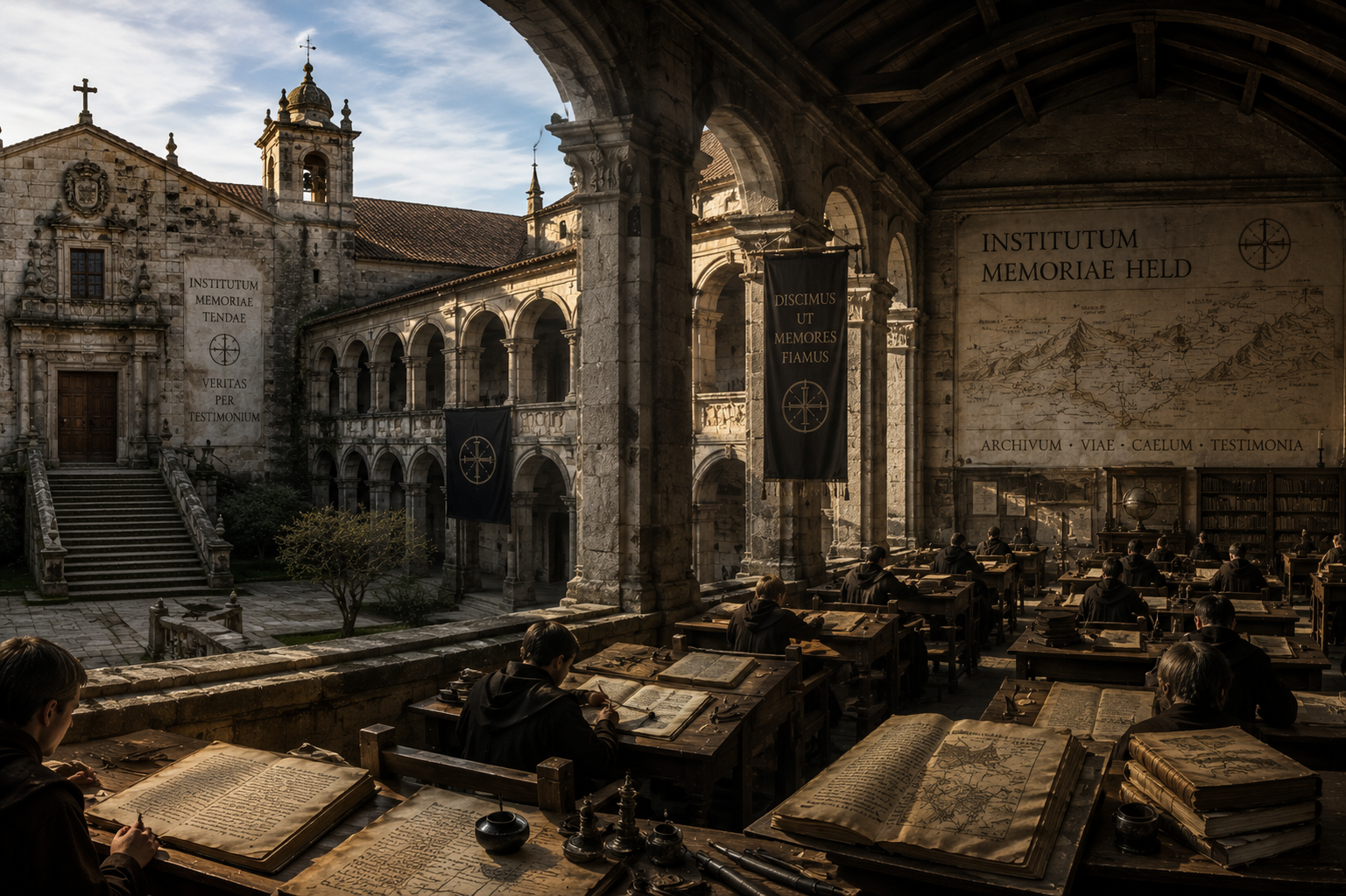
It asks patience that is not passive. A reader of literary slow-burn dark fantasy is not waiting for the plot to start. They are already inside it. They are reading the landscape as a document. They are reading institutional language for what it conceals. They notice what is missing from the records. They understand that the things left unsaid are often the most important things.
This kind of reader is drawn to books like Piranesi — where the strangeness of the world is not explained but inhabited, where the narrator's relationship to the space is the story. Or to Jonathan Strange & Mr Norrell — where the footnotes are as rich as the chapters, where English magical history has the texture of a real archive. Or to certain sections of Wolf Hall — where a sentence can carry a century of political weight, and where the darkness is bureaucratic and all the more sinister for it.
What these books share: the world is older than the story. The characters arrive into something already shaped by forces they do not fully understand. The story is, in part, the process of understanding those forces — and discovering that understanding is not the same as resolution.
A world that has already happened.
ASHWANA is set in a mountain fortress five hundred years after a catastrophe that no one inside the fortress fully understands. The institution that governs Fort Kael — the Survey Division, the Territorial Authority, the Archive — was built to manage the aftermath of something. Its documents are precise, bureaucratic, and deliberately incomplete. The records have gaps. The classification system has a sealed division.
The darkness is not supernatural horror. It is institutional. The horror of a system that has learned to function by not asking certain questions. The Ashwaste — the forbidden zone at the heart of the mountain territory — appears in survey reports as a boundary anomaly, in territorial records as a jurisdiction classification, in folklore records as something older. None of these accounts agree.
The story moves at the pace of an investigation. A survey apprentice. A commandant who has been here longer than anyone should be. Documents that do not match. A world asking to be read correctly, filed incorrectly for centuries.
That is what literary slow-burn historical dark fantasy does. It gives you a world with a history. Characters who are not chosen — institutional employees doing their jobs. And it asks you to read the silence between the records.
ASHWANA — Book One of The Fractured Elden — is available now on Amazon, Apple Books, Kobo, and Google Play. The archive is not yet closed.