From the sheep to the blanket: two weeks, no shortcuts.
A Serra da Estrela wool blanket takes approximately two weeks to produce from raw material to finished fabric. The wool arrives at the factory in two-hundred kilogram bales, already washed of the natural grease and dust accumulated during the shearing process. Even after washing, some straw residue may remain — a trace of the mountain pasture that no industrial process fully removes.
The first stage is carding: the dense, compressed wool is teased apart into fluffy sheets using machines fitted with fine wire teeth. The sheets are then combed to align the fibres before spinning. Spinning draws the combed wool into thread, which is wound onto spindles and prepared for the loom. Each stage requires a specialist. The wool passes through many hands before it becomes a blanket. No single worker knows the full process from first to last. The knowledge is distributed across the people who do it.
Weaving interlaces the weft threads with the warp on a loom. This is where the pattern of the blanket is established — the weave structure, the density, the width. The 19th-century looms still in use at the Burel Factory in Manteigas produce blankets at the same speed and with the same constraints as they did when they were built. They cannot be hurried. The rhythm of the machine sets the pace of production.
The machine that makes burel waterproof without a single chemical.
After weaving, the cloth undergoes the process that transforms ordinary woven wool into burel. The fabric is fed into a machine called a stomper — a device that beats and scalds the wool repeatedly, compressing the fibres until they reach their maximum degree of compaction. This process takes between four and five hours. The fibres become so tightly packed that water slides off the surface rather than penetrating it. No waterproofing agent is used. The impermeability is entirely mechanical — a product of pressure, heat, and time.
The stomper is the defining step. Without it, the fabric is woven wool. With it, the fabric is burel. The distinction matters because the impermeability of burel depends on the specific fibre length of the Bordaleira sheep's wool — the breed native to Serra da Estrela. Other wool types, when subjected to the same process, do not achieve the same degree of compaction. The fabric is inseparable from the breed, and the breed is inseparable from the mountain.
After the stomper, the fabric is inspected, trimmed, and finished. If colour is being added — a practice introduced by the Burel Factory that was not part of the traditional process — the dyeing happens at this stage. The traditional burel existed only in the natural colours of the Bordaleira wool: pale beige, grey, and the dark brown of the undyed fleece. These are still available. They are the colours the shepherds wore.
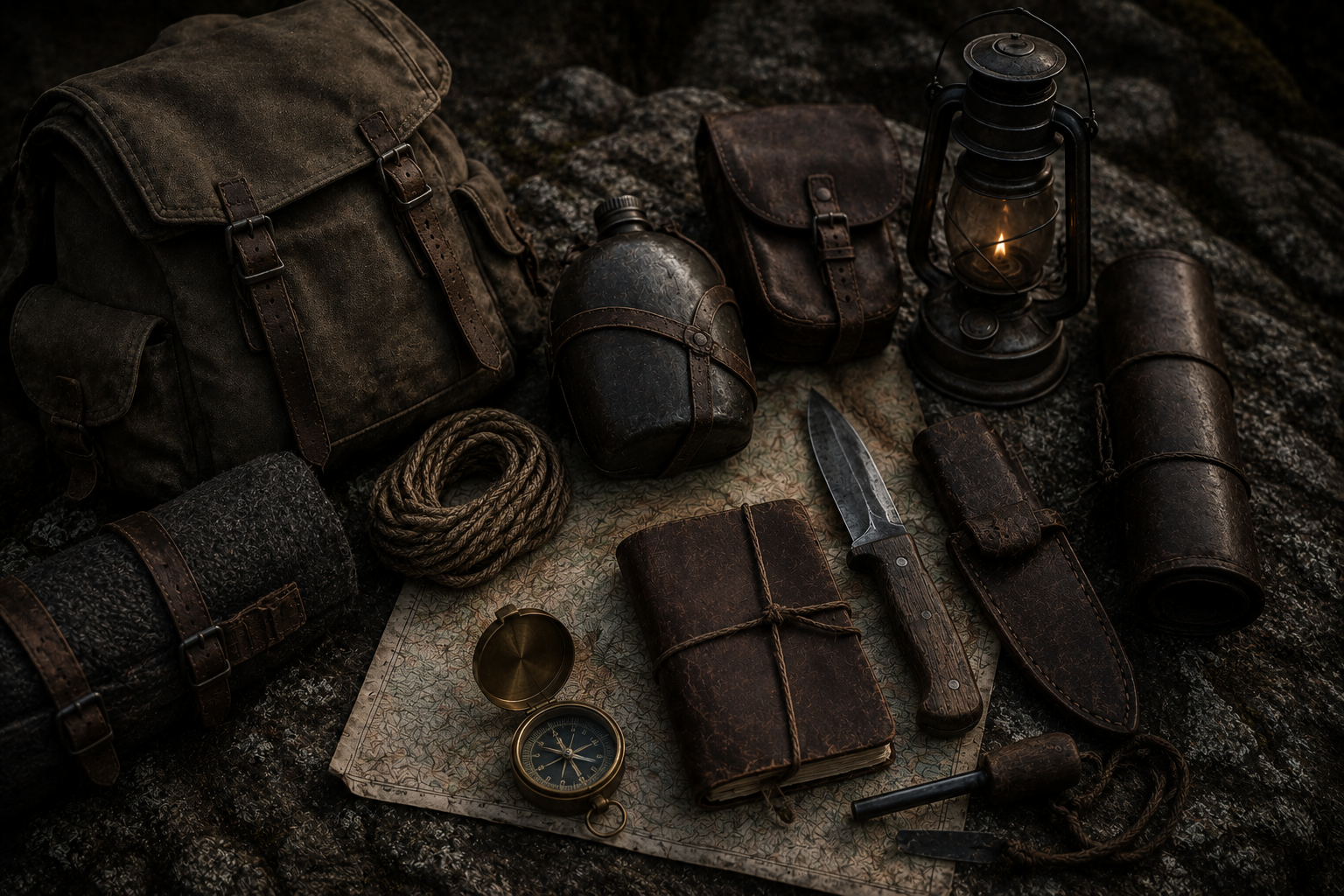
It cannot be found in any manual. It lives in the hands of the people who do it.
When Isabel Costa and João Tomás acquired the Lanifícios Império factory in 2010, they preserved not only the 19th-century machinery but the master weavers — the people whose knowledge of the process had been accumulated across decades of practice and could not be recovered from any written source. The technical manuals did not exist, or did not capture the adjustments that experienced hands make automatically: the pressure applied at a particular stage, the sound that indicates the stomper is running correctly, the visual check that distinguishes acceptable fabric from fabric that needs to be remade.
The master weavers were put to work teaching the younger ones. This was the transfer the factory required — not documentation, but demonstration. The knowledge moved the way it had always moved: from one pair of hands to another, in a working factory, over time. Whether it transferred completely is a question that cannot be answered until the last master weaver is no longer there to be asked.
The Burel Factory operates a strict zero-waste policy. The offcuts and remnants of production are repurposed rather than discarded. This is not a recent environmental policy. It is the continuation of a mountain economy that wasted nothing because nothing could be wasted. The mountain gave the wool. The factory gave the labour. The blanket lasted for decades. The process began again.
The Survey Division issues burel. It does not record how it is made.
The material culture records of Fort Kael document the distribution of burel to field teams with the same precision applied to ration allocations and route supplies. The weight of each cape. The condition on return. The frequency of replacement. What the records do not contain is any description of the production process — the carding, the spinning, the weaving, the stomping. The Archive knows what burel does. It does not record how burel is made.
This is not an oversight. The knowledge of how to make burel was held by the weaving families of the lower settlements, who were outside the jurisdiction of the Survey Division and outside the classification system of the Material Culture Division. They supplied the product. They were not asked to explain it. The Archive received the capes and logged them. The process remained with the people who knew it.
In the world of ASHWANA, as in Serra da Estrela, the most essential knowledge is the knowledge that was never written down — because the people who held it had no reason to write it, and the institutions that needed it had no reason to ask.
ASHWANA — Book One of The Fractured Elden — is available now on Amazon, Apple Books, Kobo, and Google Play. The archive is not yet closed.