Burel is medieval in origin. The process has not fundamentally changed.
Burel is a wool fabric of medieval origin, produced exclusively from the wool of the Bordaleira sheep — a breed native to Serra da Estrela, found in significant numbers nowhere else. The fabric is one hundred percent wool. Its impermeability is achieved not through chemical treatment but through mechanical compression: the woven cloth is beaten and scalded in a machine called a stomper, which compacts the fibres until water slides off the surface rather than penetrating it. The process takes between four and five hours. It was the same process in the medieval period.
The wool tradition of Serra da Estrela is inseparable from transhumance — the seasonal migration of flocks between the high summer pastures and the lower winter valleys. For centuries, shepherds drove their flocks up to the high plateau of Serra da Estrela in late spring and brought them down before the first hard frosts. The mountain was the summer address of the sheep. The wool sheared from them each season was the raw material of an entire regional economy.
The villages that grew around this economy specialised accordingly. Manteigas, Covilhã, and the smaller settlements along the wool routes developed weaving traditions, dyeing traditions, and a technical knowledge of the fabric that was passed from one generation to the next within families. The knowledge was not written down. It was demonstrated, corrected, and inherited.
Not softer. More compressed. Built for the mountain, not for comfort.
Burel was never a luxury fabric. It was functional — designed for people who spent months at altitude in conditions that would destroy a less robust material. The burel cape was the standard outer garment of the Serra da Estrela shepherd for centuries. It shed rain. It held warmth. It lasted for decades with minimal maintenance. A shepherd who owned a burel cape owned something that would outlast most other possessions.
In the Middle Ages, burel was used as a royal mourning garment — a use that reflects its association with severity and endurance rather than comfort or display. The fabric that clothed shepherds in the mountains was also the fabric in which the court marked its grief. The connection between the two uses is not accidental. Burel was the material of necessary things.
The Bordaleira sheep whose wool produces burel have a specific fibre length that is essential to the compression process. Other wool types cannot achieve the same degree of compaction. The impermeability of burel depends entirely on this breed, on this mountain, on this process. It cannot be replicated with imported materials or shortened production timelines. The fabric is a product of a very specific place doing a very specific thing for a very long time.
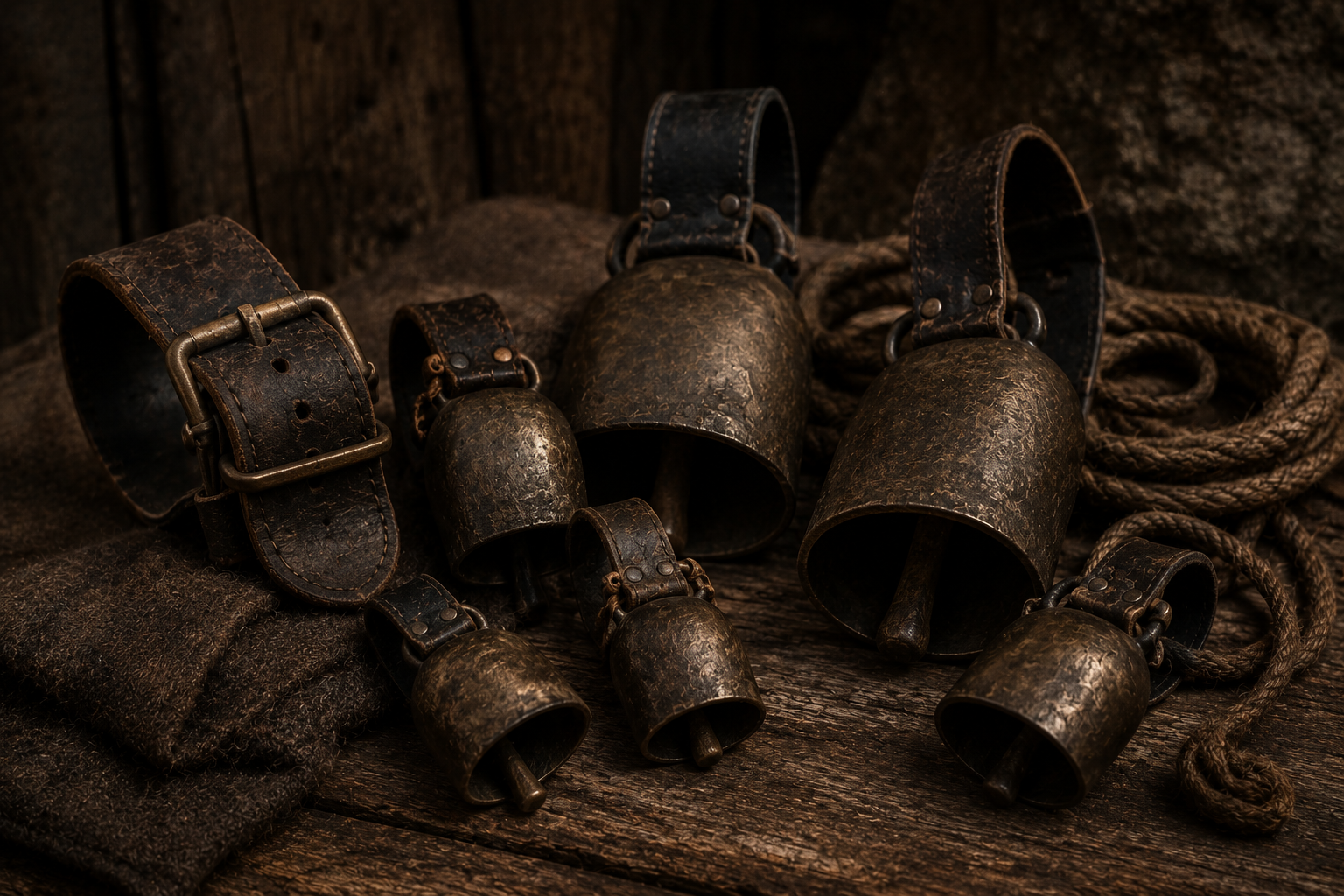
By the late twentieth century, all but one factory had closed.
The wool tradition of Serra da Estrela came close to ending in the second half of the twentieth century. The combination of rural depopulation, competition from cheaper imported fabrics, and the decline of the pastoral economy that had sustained the wool industry for centuries reduced the number of operating factories to one. The technical knowledge that had been passed between generations within weaving families was at risk of being lost with the last practitioners.
The revival came from outside the traditional industry. In 2010, the Burel Factory was established in Manteigas in the restored premises of the old Império Wool Factory, using antique machinery that had been preserved rather than scrapped. The factory introduced colour to burel production — traditionally the fabric was only produced in the natural tones of the Bordaleira wool, ranging from pale beige to dark brown. The addition of colour opened the material to design and decoration markets that had not previously existed for it.
The revival did not restore the wool tradition to what it had been. It created something adjacent — a contemporary industry that uses the same process, the same breed, the same mountain, but serves a different market and employs a different logic. The old knowledge and the new application share a material. Whether they share a tradition is a question the region continues to negotiate.
In the world of ASHWANA, the Material Culture Division maintains ration records for burel going back to Year 807.
The Archive of Fort Kael maintains a Material Culture Division that tracks the production, distribution, and consumption of essential goods within the mountain territory. Its oldest continuous record concerns wool — specifically the allocation of burel capes to Survey Division field teams operating in the higher route sectors during winter months. The record begins in Year 807. It has not been interrupted.
What the Material Culture Division records is not the history of the wool tradition but its logistics. How many capes were issued. To which teams. In which seasons. The records note shortages. They note substitutions when the standard allocation could not be met. They do not record the names of the weavers, the location of the looms, or the process by which the fabric was made. That knowledge was held elsewhere — in families, in villages, in the practiced hands of people who were never asked to write anything down.
The Survey Division still issues burel capes to field teams operating above the snowline. The Material Culture Division still records the allocation. The weavers whose families have held this knowledge for ten generations are not mentioned in the record. They never were.
ASHWANA — Book One of The Fractured Elden — is available now on Amazon, Apple Books, Kobo, and Google Play. The archive is not yet closed.