They were not built for visitors. They were built to survive.
The mountain villages of Serra da Estrela were not designed with aesthetics in mind. They were built for altitude, for cold, for isolation. The material was what the mountain offered: granite. The layout followed the logic of the terrain — narrow streets to reduce wind exposure, houses close together to share warmth, doorways low enough to hold heat. These are not picturesque villages that happened to be old. They are functional structures that happened to survive.
Several of them belong to a network called the Aldeias de Montanha — the Mountain Villages of Portugal — a designation created to give new visibility to settlements that had been losing population for decades. The villages in this network share a common character: stone construction, high altitude, small permanent populations, and a relationship to the surrounding landscape that has not fundamentally changed since the medieval period.
Manteigas sits at the base of the glacial valley of the Zêzere river, the longest glacial valley in the Iberian Peninsula. The valley was carved by ice during the last glacial period, and Manteigas grew in its shadow — a village shaped by geological forces it had nothing to do with. It is the most common base for walking the Serra da Estrela and the most accessible of the mountain settlements, but it retains the granite character of the higher villages.
Linhares. Loriga. Sortelha. Villages that did not move with time.
Linhares da Beira is a medieval village founded in the twelfth century. Its castle rises above the valley on a granite outcrop, and its streets have not changed their basic layout in several hundred years. The village is small enough that most of it can be walked in an hour, but the density of preserved architecture — stone walls, narrow passages, a pillory, a Romanesque church — makes it one of the most complete examples of medieval rural construction in Portugal.
Loriga sits in the municipality of Seia, deep in the mountains, surrounded by terrain that genuinely resembles alpine landscape. The comparison to Switzerland is made often and somewhat earnestly by the Portuguese, which says something about how unexpected the landscape is to anyone arriving from the lowlands. Loriga has a Roman bridge, a stretch of Roman road, fountains, chapels, and the remains of a way of life built around wool, water, and altitude. The river beach draws summer visitors. The rest of the year, the village is largely left to itself.
Sortelha is one of the best-preserved medieval villages in Portugal. Founded in the thirteenth century, it is enclosed by walls that still define its perimeter. The castle sits on a granite outcrop above the village and offers unobstructed views across the Beira Interior towards the Spanish border. In 2023, the United Nations World Tourism Organisation named Sortelha one of its Best Tourism Villages — a designation that had no visible effect on the silence of its granite streets.
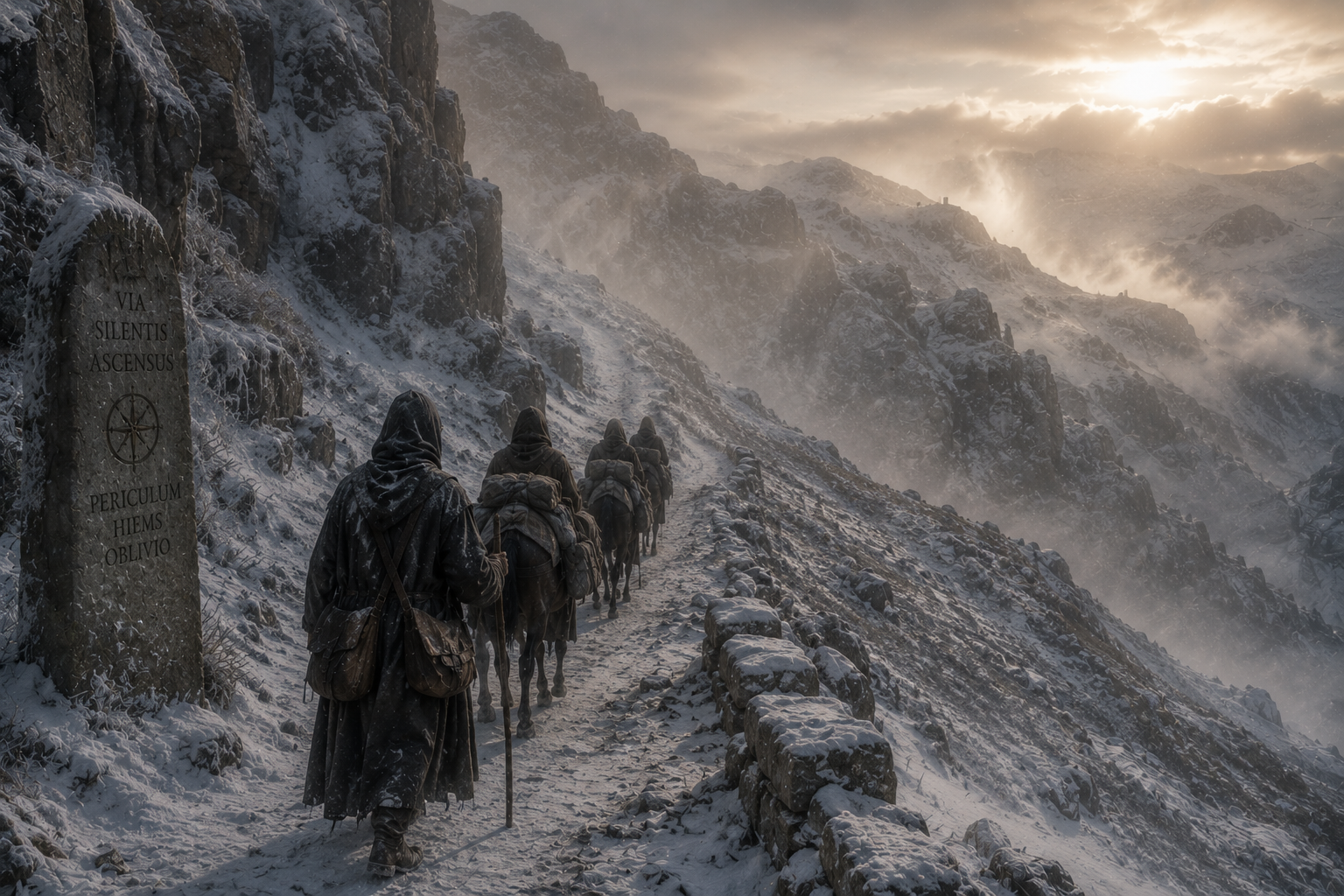
Distance. Altitude. The absence of roads that go anywhere else.
The villages of Serra da Estrela are not hidden in the sense of being secret. They appear on maps. They have postal codes. What makes them feel hidden is the nature of the roads that reach them — narrow, steep, often without passing places, winding through terrain that discourages casual travel. To reach some of them requires a specific decision to go there. They are not on the way to anywhere else.
Piódão, in the Serra do Açor to the west of Serra da Estrela, is the most extreme example. It clings to the terraced slope of a mountain, built almost entirely in local schist — a blue-grey stone that gives the village an otherworldly uniformity. Every house, every wall, every street is the same material. The village looks as though it was assembled from a single piece of mountain. The access road is a commitment. First-time visitors often describe the moment of seeing it as disorienting — a village that looks unlike anything else in the country, appearing suddenly after a road that seemed to be going nowhere.
Belmonte, by contrast, sits at a lower elevation and is more accessible, but carries a different kind of hidden history. It was the birthplace of Pedro Álvares Cabral, the navigator credited with the European discovery of Brazil. It is also one of the few places in Portugal where a Jewish community maintained its traditions across centuries of persecution, practicing in secret, passing observance from one generation to the next long after the official record suggested otherwise. The history of what was hidden in Belmonte is not geological. It is human.
In the world of ASHWANA, settlements are classified by altitude and access.
The world of ASHWANA draws directly from the settlement patterns of Serra da Estrela. Fort Kael is the dominant administrative centre of a mountain territory, but it governs a network of smaller settlements — some classified as active, some as dormant, some as closed for reasons the current territorial records do not explain. The Survey Division maintains route maps between these settlements. The routes are graded by season, altitude, and the reliability of the terrain underfoot.
What the Survey Division does not record is what happened to the settlements that no longer appear in the active register. The Eastern Ridge Settlement Removal document — filed in an administrative year that does not match the survey records that precede it — describes a relocation process. The villages involved are not named. The reason for relocation is not given. The document simply notes that the process was completed and that the affected routes have been reclassified as discontinued.
The real mountain villages of Serra da Estrela were not relocated by administrative order. They emptied slowly, across decades, as younger generations left for the cities and the old ways of mountain life became economically unviable. The result is the same: settlements that were once inhabited and are no longer, their walls still standing, their doorways still there, waiting for a record that explains what happened to them.
ASHWANA — Book One of The Fractured Elden — is available now on Amazon, Apple Books, Kobo, and Google Play. The archive is not yet closed.