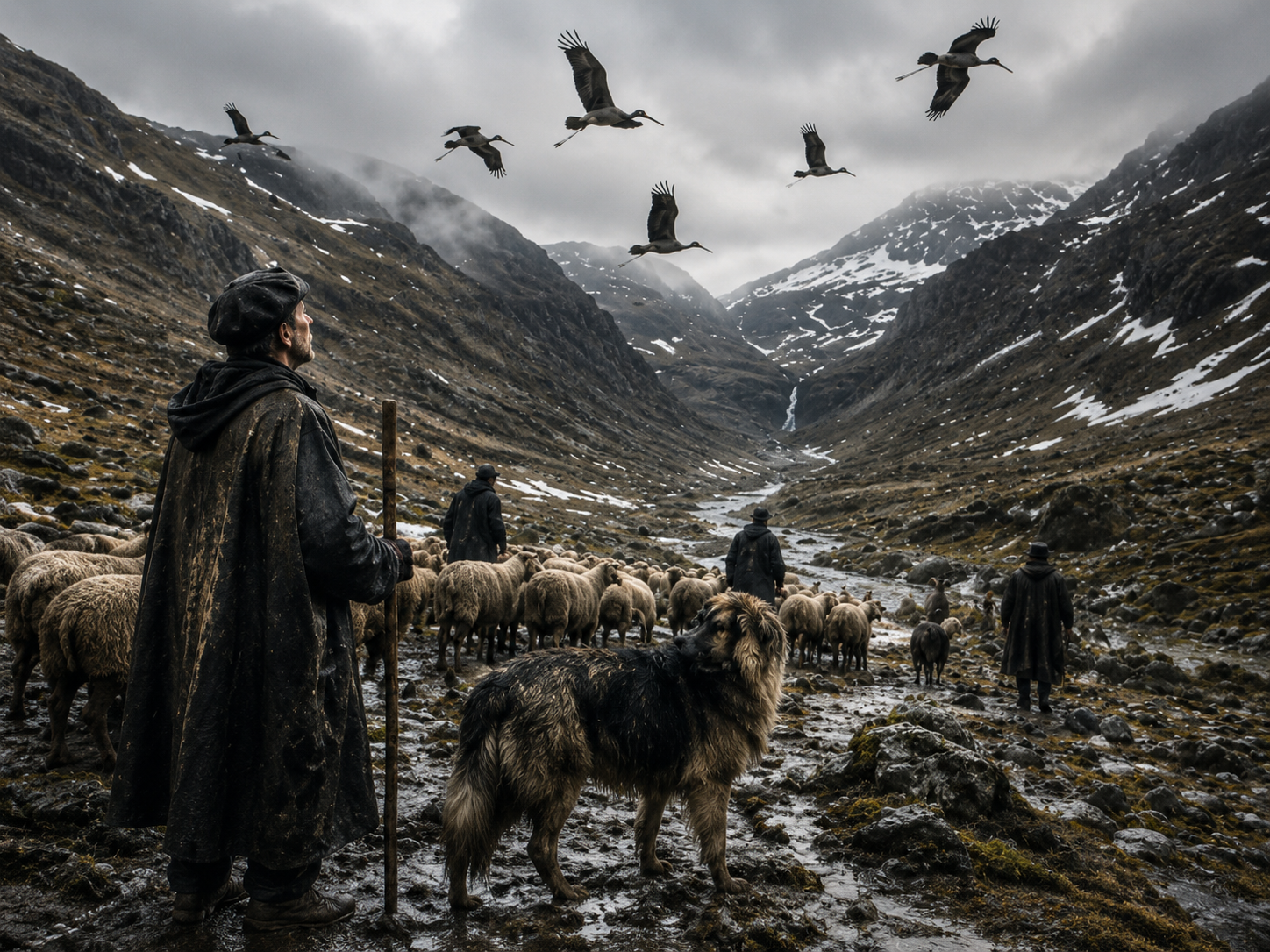
The black stork does not nest near the Ashwaste. This is not superstition. It is observation. In four generations of recorded shepherd testimony, no black stork has been sighted within three days' walk of the Ashwaste boundary. The birds avoid the area. Shepherds have noted this consistently enough that its absence became a form of navigation — if you saw a black stork, you were not too close.
In Year 812, three independent informants reported sightings of black storks at the Ashwaste margin. The informants did not know each other. They reported from different sectors. The sightings occurred within the same thirty-day period.
"My grandmother said the black stork follows the old paths. Not the routes we use. The paths underneath. She said when they come back it means the underneath is moving again. I did not believe her. I believe her now."
— Shepherd informant, Eastern Margin, Year 812
The second informant offered a different account. In their family's tradition, the black stork was not a messenger but a marker — a creature that could perceive shifts in the ground before they became visible. Their grandfather had kept records of stork movements along the southern routes for forty years. Those records are not in the Fort Kael archive.
The third informant said nothing about what the return meant. They said only that the last time the black stork was seen near the Ashwaste, a woman walked in and did not come back. They did not elaborate. They did not need to.
ARCHIVAL NOTE — FOLKLORE DIVISION
"The institutional record confirms one black stork sighting near the Ashwaste boundary in Year 312. The date corresponds to the disappearance recorded in the same year. This correspondence has been noted. It has not been investigated. The three Year 812 sightings have been filed here pending further collection."
COLLECTED BY: Archive Division, Fort Kael
YEAR 812 · ORIGIN UNVERIFIED
STATUS: OPEN — FLK-0077
APPEARS IN: ASHWANA — BOOK ONE OF THE FRACTURED ELDEN